
The Relevance of Vastu Shastra Today - Harmonizing Modern Spaces:
In an era of high-rise apartments, minimalist architecture, and smart homes, ancient
design philosophies might seem outdated. However, Vastu Shastra—the traditional Indian
system of architecture—is experiencing a global resurgence. Far from a collection of rigid
superstitions, this "science of architecture" offers a timeless blueprint for mental wellbeing, environmental harmony, and functional design in our fast-paced modern world.
The Core Philosophy: Aligning with Nature
At its heart, Vastu Shastra translates to the "science of dwelling." It is built on the premise
that everything in the universe is composed of five basic elements (‘Pancha Bhootas’):
Earth, Water, Fire, Air, and Space.
Vastu aims to align human-made structures with these elements and the Earth’s magnetic
and solar fields.
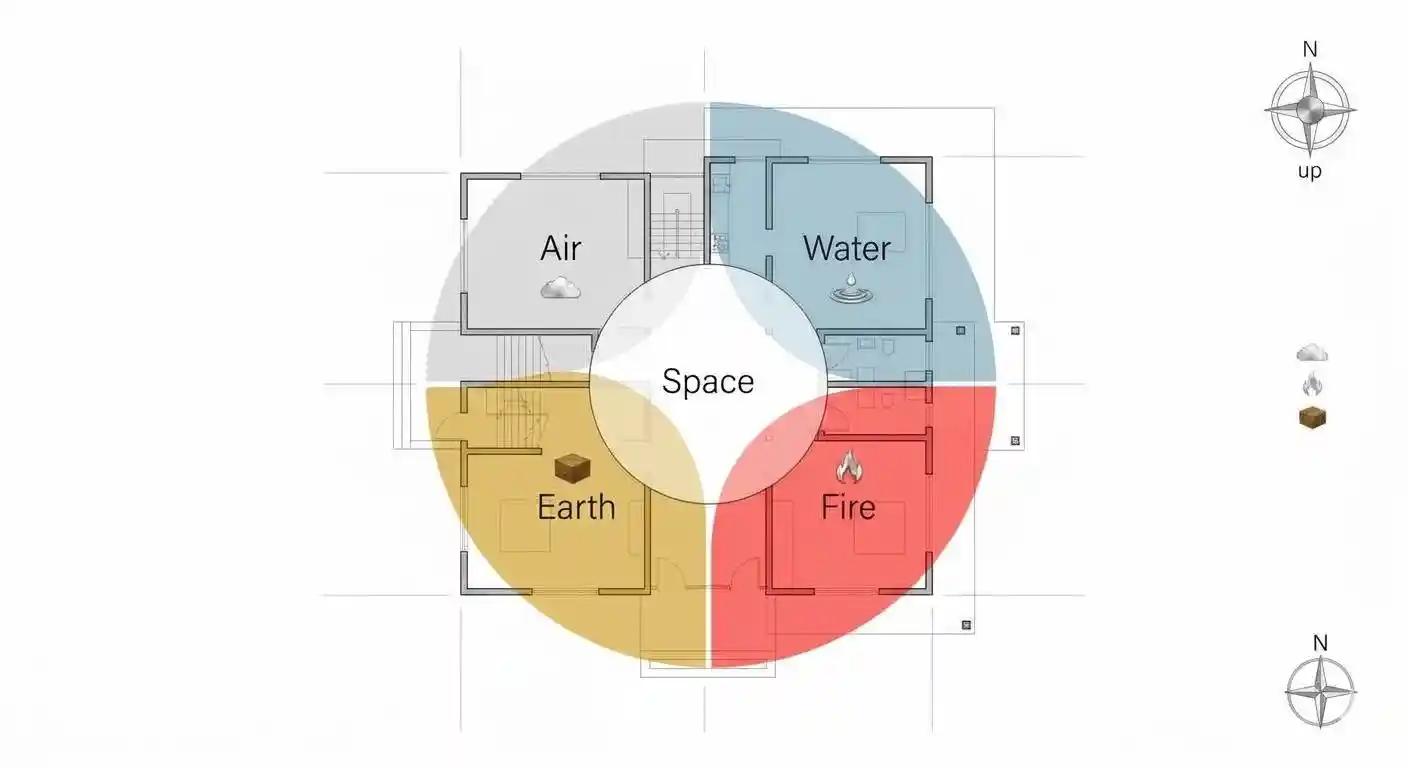
By balancing these energies, a home or workplace becomes a conduit for positive cosmic
energy (Prana), which directly impacts the health and mindset of its inhabitants
Why Vastu Matters in the 21st Century
Modern life presents unique psychological and physiological challenges that ancient
architects intuitively understood how to mitigate.
1. Enhancing Mental Health and Reducing Stress
Modern urban living often traps us in cramped, poorly lit spaces, contributing to chronic
stress and anxiety. Vastu Shastra emphasizes the placement of openings, ventilation, and
room functions to maximize natural light and airflow. For instance, placing the master
bedroom in the Southwest—the zone of stability—is believed to ground individuals,
promote deeper sleep, and alleviate anxiety
2. Optimizing Remote and Hybrid Work
The rise of remote work has blurred the boundaries between professional and personal
lives. Vastu provides practical solutions for zoning. It recommends placing home offices in
the West or Southwest to foster focus and facing North or East while working to stimulate
intellect and financial growth. This deliberate structuring helps remote workers mentally
separate "work mode" from "rest mode".
2. Optimizing Remote and Hybrid Work
Long before the modern green building movement, Vastu was inherently eco-centric. It
dictates that structures should respect local topography, maximize solar energy (hence the
emphasis on East-facing entrances), and utilize natural materials. Today's sustainable
architecture frequently overlaps with Vastu principles by prioritizing energy efficiency and a
low carbon footprint.
Adapting Ancient Rules to Contemporary Constraints
The biggest misconception about Vastu Shastra is that it requires breaking down walls or
living in mathematically perfect squares. Modern Vastu consultants focus on macroprinciples and non-invasive remedies:
• Color Psychology: Using Vastu-approved neutral and earthy tones to balance element deficiencies in a room.
• Element Symbolic Placement: Placing a small water fountain in the Northeast corner of a living room to invite prosperity and calm, mimicking the ideal elemental landscape.
• Clutter Management: Vastu dictates that stagnant energy accumulates in cluttered spaces. Simple minimalism doubles as an effective Vastu remedy, opening up pathways for fresh energy.
• Color Psychology: Using Vastu-approved neutral and earthy tones to balance element deficiencies in a room.
• Element Symbolic Placement: Placing a small water fountain in the Northeast corner of a living room to invite prosperity and calm, mimicking the ideal elemental landscape.
• Clutter Management: Vastu dictates that stagnant energy accumulates in cluttered spaces. Simple minimalism doubles as an effective Vastu remedy, opening up pathways for fresh energy.
The Bottom Line
Vastu Shastra is not about fear-based compliance; it is an art of conscious living. In today's
chaotic world, our homes are our ultimate sanctuaries. By blending the aesthetic freedom
of modern architecture with the energetic wisdom of Vastu, we can create spaces that do
not just look beautiful but deeply feel like home.
If you are looking to apply these principles to your own home, let me know:
• What is the main issue you face in space? (e.g., poor sleep, lack of focus, low energy)
• Which specific room are you looking to optimize?
• What direction does your main entrance face?
I can provide tailored, practical layout and decor tips for your exact situation.
If you want to tailor the visual layout or dive deeper into specific setups, let me know:
• What specific room are you looking to optimize? (e.g., bedroom, home office, kitchen)
• What is the main goal for your space? (e.g., better sleep, higher productivity, reduced stress)
• Do you prefer modern minimalist or traditional decor styles?
I can provide targeted tips and layout advice based on your preferences.
If you are looking to apply these principles to your own home, let me know:
• What is the main issue you face in space? (e.g., poor sleep, lack of focus, low energy)
• Which specific room are you looking to optimize?
• What direction does your main entrance face?
I can provide tailored, practical layout and decor tips for your exact situation.
If you want to tailor the visual layout or dive deeper into specific setups, let me know:
• What specific room are you looking to optimize? (e.g., bedroom, home office, kitchen)
• What is the main goal for your space? (e.g., better sleep, higher productivity, reduced stress)
• Do you prefer modern minimalist or traditional decor styles?
I can provide targeted tips and layout advice based on your preferences.